Why History Had to Be Inside the Watch
STROND founder Terry Flores on what it means to make history wearable - and the responsibility that follows when a fragment becomes an object.

By Eric Matt
In the late 1970s, when Terry Flores was ten or eleven, he took two buses across London by himself after seeing something new advertised in the newspaper.
It was a digital watch with a dark red screen, red numerals, and a silver bracelet. He cannot remember who made it. He remembers the excitement of the journey, bringing it home, and wanting to show it to his friends at school.
Around the same age, another interest was developing. His parents took him to Brooklands and bought him Airfix model kits of old aircraft. He assembled the pieces, glued them together, painted them, and added their markings. He preferred the older planes, especially the ones with propellers.
For decades, watches and vintage aviation remained parallel interests.
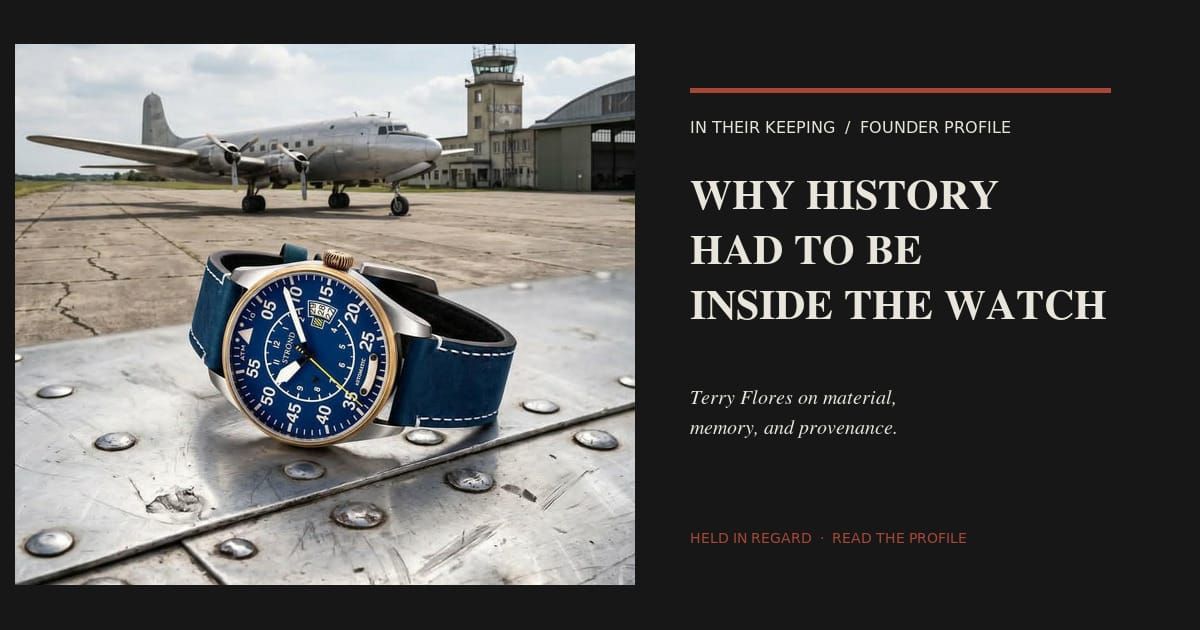
Then, shortly before the COVID-19 lockdown, Terry began considering whether he could design a watch of his own. An aviation-inspired watch was the natural starting point. The difficulty was making one that felt meaningfully different from the many watches already borrowing their visual cues from old aircraft.
So Terry asked another question:
Could the aircraft itself become part of the watch?
That question eventually led to small pieces of historical material being placed on STROND dials. Without the material, Terry told me, “it’s just another watch.”
The harder question is what the material changes.
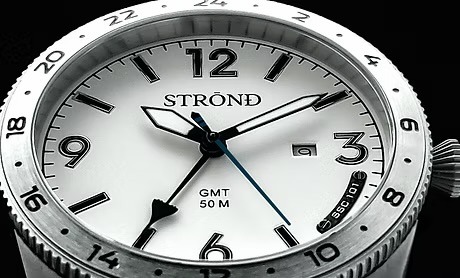
An aviation-inspired watch can borrow the colors, instruments, or shape of an aircraft. Those choices might remind someone of a particular plane or period. They might also encourage an owner to learn the history behind the design.
Terry wanted something more direct. He wanted the aircraft itself to remain physically present inside the new object.
He described contacting the Duxford Aviation Society to ask whether it had any Concorde material available. According to Terry, Charles Butler, then the society’s director, offered him a damaged panel that had been removed from Concorde 101 after an accident involving a forklift.
Terry bought the panel and sent it to watchmakers in Japan. There, he said, the metal was thinned and cut small enough to become the dial tags used in STROND’s Concorde watches.
The fragment occupies very little space on the finished watch. Once you know where it came from, it can become the part you notice most.
A photograph can show us Concorde. A museum can let us stand near one. A written history can explain what the aircraft represented, where it flew, and why people still remember it.
A physical fragment does something slightly different. It lets someone carry the material forward, helping its history continue to circulate.
Someone notices the watch. The owner explains the small piece of metal on the dial. The conversation moves from the watch to the aircraft, from the aircraft to the people who built or traveled aboard it, and sometimes from public history into private memory.
Terry has seen that happen directly.
He told me about a woman who bought one of the Concorde watches for her grandfather. The man had traveled aboard Concorde several times between London and the United States and remembered the aircraft fondly.
According to Terry, the woman later sent photographs of her grandfather wearing the watch. She said the gift had overwhelmed him and brought tears to his eyes. He began wearing it regularly.
The fragment did not create the grandfather’s memories. It did not reproduce the experience of boarding Concorde or crossing the Atlantic aboard it.
What it offered was a tangible connection to an experience that could no longer be repeated. Terry described the result as “a memory piece of history.”
The phrase shifts the purpose of the object. The watch still tells time, but the material also gives a memory somewhere physical to reside.
The same idea runs through other STROND projects.
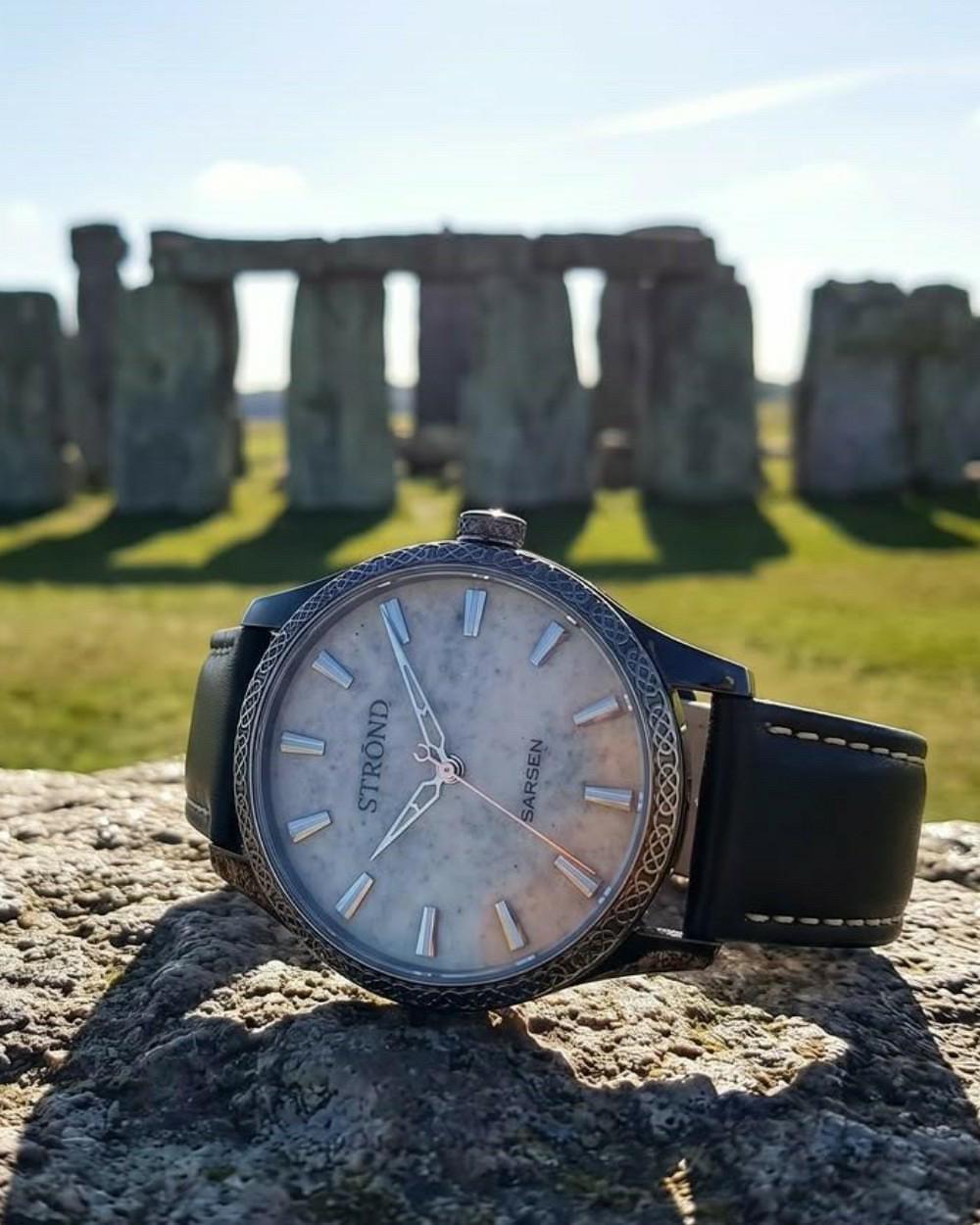
Terry says the company has used material from a DC-3 and from the Spirit of Freedom, a DC-4 that was badly damaged in a storm. STROND has also made watches with stone that Terry says came from the same geological sources associated with the inner and outer circles of Stonehenge.
In each case, Terry is trying to take material attached to a larger history and place it inside an object that can be carried into ordinary life.
The Spirit of Freedom material carries an additional tension because, according to Terry, it became available after the aircraft was damaged and panels were removed.
The fragment is still material, but it also becomes a physical link to the larger object.
To make that history wearable, however, the material has to change. It must be removed or recovered, cut, thinned, divided, and turned into smaller components.
That raises a question without an easy answer.
Is dividing historical material a form of preservation, transformation, commercial reuse, or some combination of the three?
What survives when a larger object becomes many smaller ones? What is lost?
In the examples Terry described in detail, the material had already been separated from its original context. According to him, the Concorde panel had been removed after forklift damage, while the Spirit of Freedom material became available after the aircraft was damaged in a storm. He described the stone as coming through offcuts and a drilled core rather than from the monuments themselves.
That context matters, but it does not completely resolve the tension.
Traditional preservation often aims to keep an object intact. In the examples Terry described, STROND began with material that had already been separated from its source and gave those fragments a new use.
The meaning of a historical fragment also depends partly on provenance.
A small piece of material on a dial does not announce where it came from. Its connection to Concorde, a DC-3, or the Spirit of Freedom comes from the account and documentation that accompany it.
Terry said STROND includes certificates of authenticity with its watches. Terry also spoke openly about the trust involved when a company transforms source material into pieces its customers never saw in their original form.
While discussing the Stonehenge watches, Terry acknowledged that buyers are, to some extent, relying on his account of where the material came from. He said that, for a future stone project, he may seek additional documentation from landowners or others connected to the material’s source.
That is not a challenge unique to STROND. It follows from the concept itself. As a fragment becomes smaller and more transformed, preserving a clear account of its journey becomes increasingly important.
The physical material may create a sense of closeness to history. Provenance helps explain why that closeness feels credible.
What begins with the excitement of holding a piece of history also creates a responsibility to preserve the history of the piece itself.
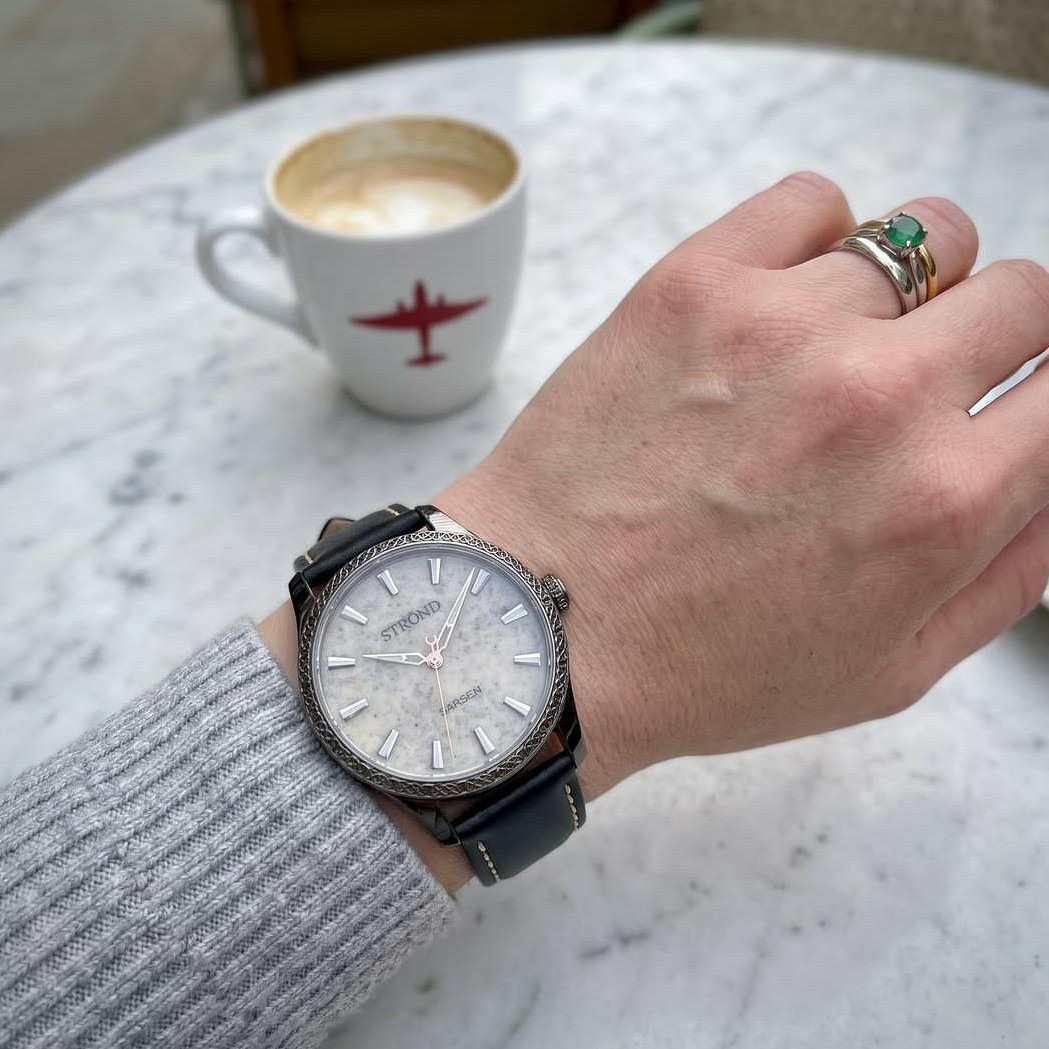
Terry’s story began with two childhood interests: watches and old aircraft.
As a boy, he assembled model aircraft from Airfix kits.
Now he works in the other direction.
Instead of building representations of aircraft from new pieces, he designs watches around fragments connected to the histories that first fascinated him.
He says the customer stories matter as much as the products. When someone receives a watch connected to an aircraft they remember, or begins learning about a history they had never encountered, Terry sees that as evidence the idea has worked.
Perhaps that is what physical history adds.
The material does not contain the whole story.
It gives the story somewhere to begin.
Reporting note
This profile is based on a remote interview with Terry Flores. Held in Regard did not physically inspect the watches or independently authenticate the source materials. Where material origins or chain-of-custody claims have not been independently verified, they are attributed to Terry or STROND.