I Would Never Spend That Much on a Watch
Six years after walking away from a Rolex Milgauss, I wired $9,350 for my first Rolex. The line I thought I had drawn was never just about money. When does buying something you once considered irresponsible become an acknowledgment of how far you've come?


In October 2017, I was 29, living in Denver, and had just wired $9,350 to a jeweler in my old city of Philadelphia for a Rolex GMT-Master II.
It was a reference 116710BLNR on an Oyster bracelet. My first Rolex. I had never handled it. I hadn’t tried it on. I was wiring the funds simply because I had fallen in love with pictures and how people talked about it online.
I always thought my first major purchase would be a Daytona, a watch I wanted when I was a kid. But living in Denver with my family back East, the GMT became a visual callback. Keeping the GMT hand set to Philadelphia time offered a way to navigate the time difference while warmly reminding me of home.
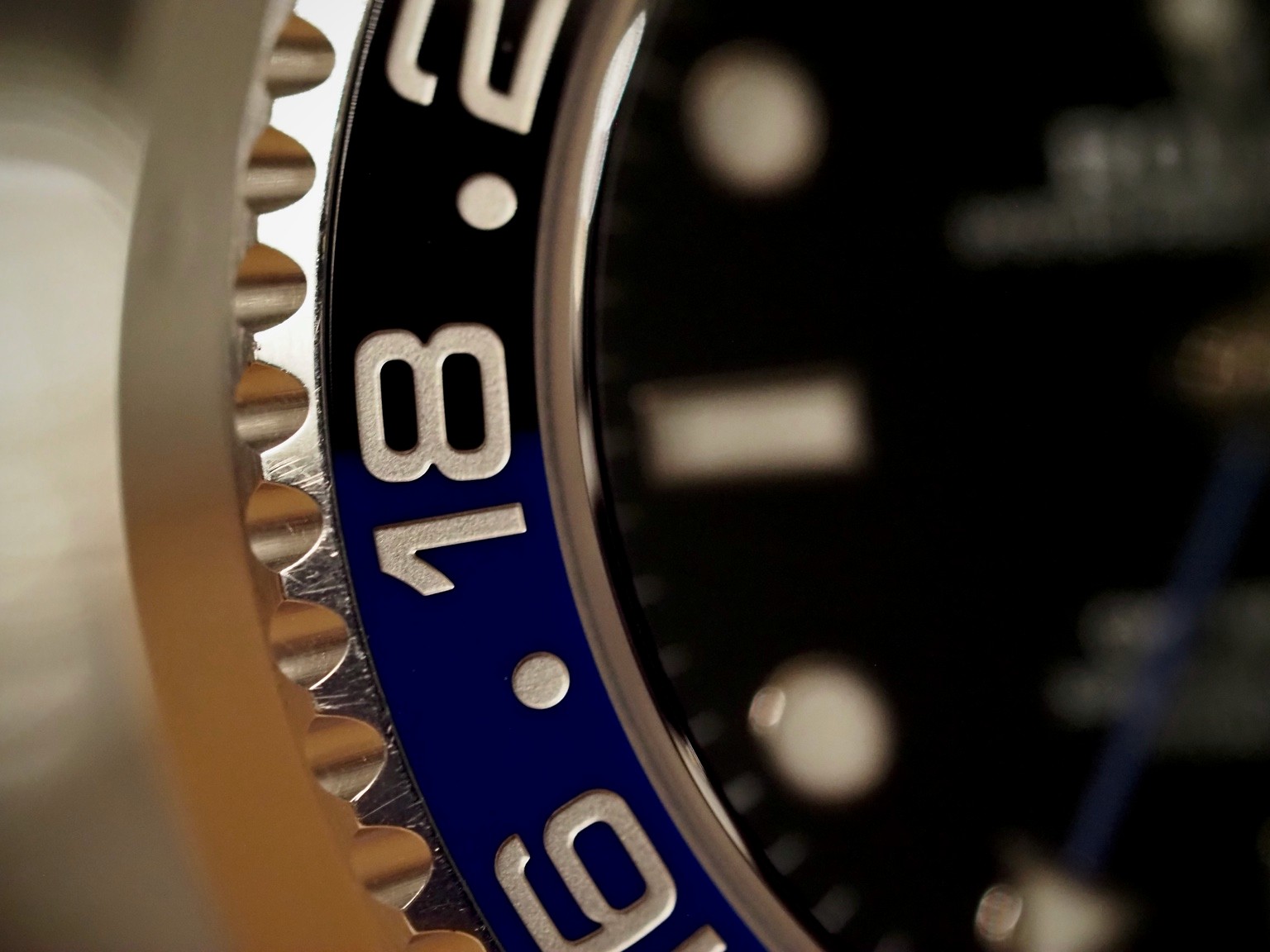
The black-and-blue ceramic bezel fascinated me for another reason. Introduced in 2013, it was the first two-color ceramic bezel insert made from a single piece. Rolex had solved a difficult manufacturing problem, producing a scratch-resistant bezel with colors designed to resist fading. I loved the clear division between day and night, but I also appreciated the engineering behind something I would look at every day.
As I processed the wire transfer, I felt an acute nausea that I’ve since grown familiar with as part of this passion. Staring at the screen, I hoped I’d like the watch as much in person. This was the most money I’d ever spent on something I didn’t need.
In writing this, I began to wonder where my line had been and when exactly I had decided to cross it.
I traced it back to a Rolex Milgauss, reference 116400GV, that I encountered in 2011 at a jeweler in a shopping mall in New Jersey. I loved its connection to science, particularly its history with CERN and the scientists working around powerful magnetic fields. The lightning-bolt seconds hand brought a bit of levity to an otherwise buttoned-down brand, and I thought that suited my personality.
I wanted that watch, but I couldn’t justify it. I was living at home, and at approximately $8,000, the Milgauss cost more than the used Hyundai I was driving. I felt there were life milestones I needed to reach before buying something like this. I remember walking out of the store thinking, “I would never spend that much money on a watch.”
Here I was six years later spending “I would never spend that much money on a watch” money.
In those six years, I had completed a master’s degree, gotten engaged, moved to Denver, changed careers, and sold my house back in Philly.
The milestones I thought I needed when I walked out of that shopping mall in New Jersey had now come to pass. Selling my house had given me the financial flexibility to make the purchase without putting our other plans at risk.
For some, I think “I would never spend that much money on a watch” is another way of saying “I have better uses for that money.” For me, I think it was another way of saying “I wouldn’t put my other priorities at risk.”
It was never a firm dollar amount. It was about what else I might have to give up or delay by spending that much on something for my wrist. I was so focused on what the purchase might cost me that I rarely considered whether it could also be a way to appreciate how far I’d come.
That is where my wife stepped in. She knows when to be my guardrails and when to be an enabler. As she saw me researching, wanting but uncertain, she told me to stop worrying about the money and do something for myself.
The box arrived 48 hours later.
I sat at the kitchen table, carefully working my way through the outer packaging, the booklets, and the warranty card. As I slowly opened the green box to reveal the watch, the nausea of the wire transfer instantly evaporated. The Cerachrom bezel caught the light, and the blue GMT hand popped against the black dial exactly the way it had on my screen.
What I remember most about handling the watch for the first time was its weight. I had owned stainless-steel bracelet watches before, but none had felt quite like this. The substantial case, broad lugs, and bracelet gave it a presence that matched what I had admired in photographs.
That weight also felt like the last six years.
When I talk about watches, I occasionally meet someone who points out that their phone or inexpensive watch tells time just as well, if not better. They’re right. And even someone who appreciates the craftsmanship may have no interest in spending this much on a watch.
I understand that position. I held it myself.
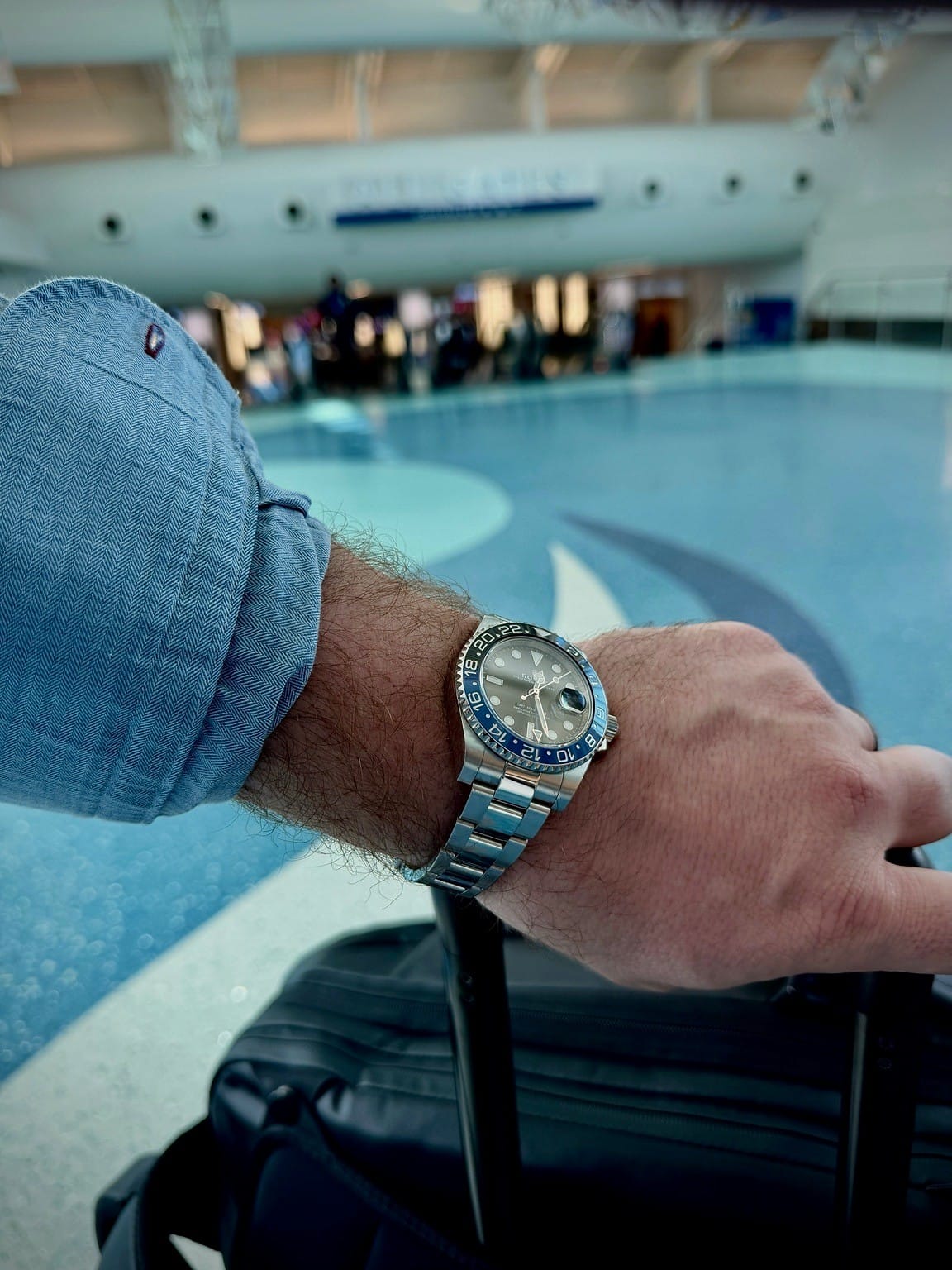
Today, when I put on the GMT-Master II, I still notice its weight. But I also think about the years that led me to it and everything that has happened since.
When someone notices the watch, I still sometimes feel the instinct to thank them and downplay it. I’m aware of the privilege of wearing something on my wrist that costs as much as a used car.
I don’t regret buying it. But I haven’t entirely lost the part of me that walked away from the Milgauss six years earlier.
Have a watch—and a story—to tell?
In Their Keeping shares the personal stories carried by watches. It does not need to be rare or valuable. Tell us about the watch, the story it carries, and why it matters to you.
Send Held in Regard a direct message on Instagram (@heldinregard) or email info@heldinregard.com for consideration for a future feature.